In the fast-paced world of technological innovation, the realm of autonomous drones is steadily breaking barriers, revolutionizing industries, and reshaping the landscape of various sectors. From emergency management to environmental monitoring, the deployment of autonomous drone systems has become increasingly prevalent, offering unparalleled efficiency, flexibility, and safety. This article delves into the fascinating realm of autonomous drones, exploring their evolution, applications, and the groundbreaking technologies driving their autonomy.
Autonomous drones represent a significant leap forward in unmanned aerial vehicle (UAV) technology, embodying the convergence of sophisticated hardware and cutting-edge software systems. At the core of these advancements lies the integration of artificial intelligence (AI), enabling drones to perceive their surroundings, make informed decisions, and execute tasks with remarkable precision. This synergy between AI and drone technology forms the bedrock of autonomous systems, empowering drones to navigate complex environments, adapt to dynamic situations, and perform tasks autonomously.
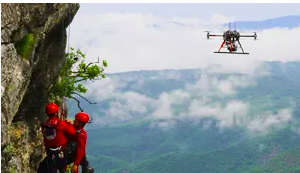
One of the most compelling applications of autonomous drones lies in emergency management, where these versatile aerial vehicles play a pivotal role in disaster response, mitigation, and recovery efforts. Equipped with advanced sensors and real-time data processing capabilities, autonomous drones excel in tasks such as search and rescue operations, damage assessment, and infrastructure inspection. By swiftly deploying drones equipped with thermal imaging cameras and AI-powered algorithms, emergency responders can efficiently locate survivors in disaster-stricken areas, identify hazards, and prioritize rescue efforts, thereby saving precious time and lives.
Moreover, the self-sufficiency of drones is further enhanced through the integration of innovative technological systems, such as big data analytics and machine learning algorithms. By leveraging vast amounts of data collected from various sources, including satellite imagery, weather forecasts, and historical incident data, autonomous drones can enhance situational awareness, optimize resource allocation, and facilitate informed decision-making in emergency scenarios. This synergy between big data and drone technology enables proactive risk management, early detection of potential threats, and the timely deployment of resources to mitigate crises effectively.
Furthermore, the development of platforms for drones has catalyzed a new wave of innovations in the autonomy of these aerial vehicles, paving the way for enhanced performance, efficiency, and safety. Through advancements in propulsion systems, energy storage solutions, and flight control algorithms, autonomous drones can achieve unprecedented levels of endurance, range, and reliability, thereby expanding their operational capabilities across diverse domains. Additionally, the integration of air safety measures, such as collision avoidance systems and geofencing technologies, ensures the safe and responsible integration of drones into airspace, mitigating the risk of accidents and collisions.
One particularly compelling use case of autonomous drones is in forest fire detection and management, where these aerial systems offer invaluable support to firefighting agencies in early detection, monitoring, and suppression efforts. Equipped with high-resolution cameras, multispectral sensors, and AI-based fire detection algorithms, autonomous drones can swiftly identify wildfire outbreaks, assess fire behavior, and provide real-time situational awareness to firefighting teams on the ground. By enabling proactive fire detection and rapid response, autonomous drones play a crucial role in minimizing the spread of wildfires, reducing property damage, and safeguarding ecosystems.
In conclusion, the era of autonomous drones heralds a paradigm shift in the way we perceive and harness aerial technology, offering unprecedented opportunities for innovation, efficiency, and safety across a myriad of applications. From emergency management to environmental monitoring, the integration of artificial intelligence, big data analytics, and technological advancements has propelled autonomous drone systems to the forefront of technological innovation. As we continue to push the boundaries of possibility, the future promises a myriad of possibilities for the further advancement and integration of autonomous drones into our daily lives, shaping a new era of aerial autonomy and innovation.